Columbia professor's film 'Chronovisor' premieres locally
The experimental feature follows a researcher investigating a 1972 device that claimed to record electromagnetic waves from past events.
By Daniel Parker ·

A new film called "Chronovisor" opens in Cuyahoga County theaters this week, offering a distinct look at the process of academic research. Directed by Jack Auen and Kevin Walker, the movie features Anne-Laure Sellier, a real-life philosophy professor at Columbia University, in the lead role. The cast includes no other main characters, focusing entirely on the protagonist's solitary work.
The film follows Béatrice Courte, a professor working on a monograph about memory. Her research centers on ancient theories regarding the mind and the concept of memory palaces. According to the Roman rhetorician Quintilian, speakers could memorize arguments by imagining a detailed architectural structure. Courte explains this method to colleagues in a dark restaurant, but they leave her alone, setting the stage for her isolated investigation.
Courte discovers the chronovisor, a device invented by Benedictine monk Pellegrino Ernetti in 1972. Ernetti claimed the machine could record electromagnetic waves emitted by events, allowing users to reconstruct history as audiovisual documentation. He described this capability as a "visual-acoustic double track" that captures the residue of time. In the film, Ernetti's supporters argue the device could also record memories and fantasies, creating a tool for ultimate surveillance.
Historically, Ernetti was exposed as a fraud when his photograph of Jesus was identified as a doctored reproduction of a sculpture by Spanish artist Lorenzo Coullaut Valera. However, the film presents this verdict as uncertain. As Courte combs through archives in the middle of the night, she grows skeptical of the attempts to discredit the monk. The narrative accelerates as she reads about the Vatican's efforts to suppress his findings and the threats made against him.
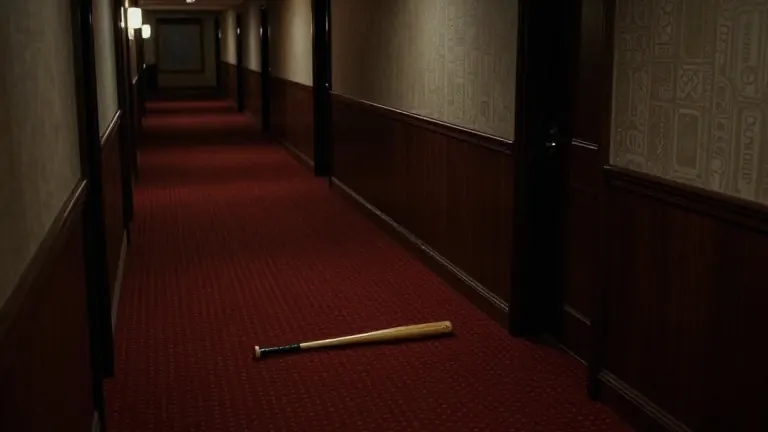
The visual style of "Chronovisor" mirrors the disorienting nature of intense thought. The screen is filled with shadows, offscreen voices, and archival photographs rather than clear shots of people. Courte is often seen from behind or in silhouette, emphasizing her detachment from her surroundings. The film is set almost exclusively at night, with scenes taking place in empty libraries and her dim apartment.
The movie uses specific techniques to represent the act of reading. Text on the screen is highlighted in white as Courte's gaze moves over it. Surrounding words fade away as she focuses on specific phrases. The film translates passages from French, German, and Italian into English in real time, overlaying the original text with its rendering. This creates a layered effect that mimics the complexity of academic study.
Courte works in an environment that feels slightly out of sync with the present day. She takes notes on a typewriter instead of using a laptop. She consults librarians for references rather than searching digital databases. Her sources are physical objects, including faded books and magazine articles. She uses an iPhone only to make calls, never for texting or navigation, further separating her from modern digital habits.
The film incorporates music from Gustav Holst's orchestral suite "The Planets" and Gregorian chants to underscore the protagonist's growing obsession. The score swells as Courte reads faster and with greater desperation. The editing becomes syncopated, reflecting her mental state as she races toward discovery. The only drama in the film is the drama of research itself, with no conventional action sequences or plot twists.
The directors chose horror as the genre to depict the pangs of thinking. Auen told an interviewer that the act of scholarship is high adventure in its own right. The film suggests that thought and memory disrupt the neat boundaries between the physical and the incorporeal. This interstitial entity is presented as something that tempts the viewer to suspect it may act in ways that are difficult to predict or contain.
The film runs for a duration that allows for a steady accretion of atmosphere. It is both patient and feverish, capturing the cadence of a burgeoning obsession. The local screening provides an opportunity for residents to experience a film that prioritizes the internal process of thinking over external action. The premiere marks the first local showing of the work by Auen and Walker.
Source: The New Yorker · original report published
More Culture · Cleveland news · Report a business · Got a Story?