
Fuel prices in Yemen's Taiz quadruple as siege cuts supply lines
Road closures and station shutdowns have driven the cost of petrol to $77 per 20 litres, forcing residents to burn firewood and halting water production.
By Michael Collins ·
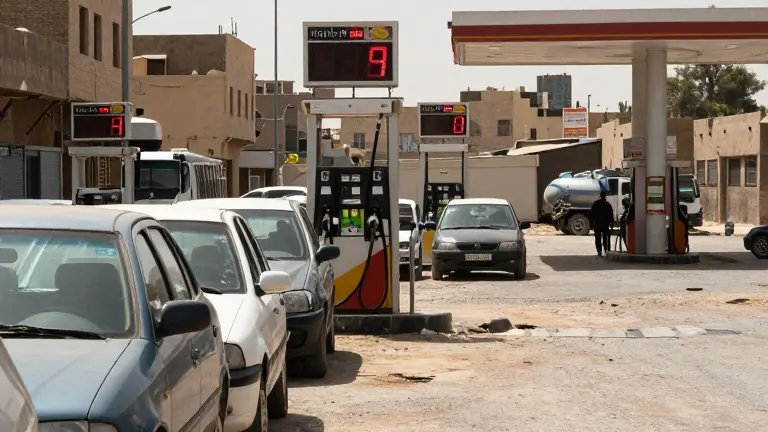
The cost of 20 litres of petrol in Taiz reached 120,000 Yemeni riyals, or $77, on Tuesday. This price is four times higher than the 30,000 riyals ($19) recorded a year ago. Diesel for the same volume rose from 46,000 riyals to 90,000 riyals, while a standard cooking gas cylinder jumped from 11,400 riyals to 40,000 riyals. These sharp increases reflect the strain on local supply chains as the city enters its third week of isolation.
Fuel stations in Taiz have remained closed since October 5. The shutdown occurred after two land routes into the city were severed in early October. The Houthis captured the town of al-Turbah on October 4, blocking the Taiz-Al-Turbah-Aden Road, which serves as the primary corridor for goods. On October 3, government-aligned forces closed the eastern al-Houban crossing, citing attempted incursions by Houthi units. With these routes blocked, the United Nations reported on October 20 that prices for available food and fuel had more than doubled.
The scarcity of diesel has created a chain reaction in essential services. Diesel powers water pumps, hospital generators, and ambulances. Local authorities stated that access restrictions prevent tankers from reaching the Al-Dhabab basin, a key source of drinking water. Consequently, water production in the city has fallen by half. UN officials noted that tanker deliveries for water now cost roughly three times as much as before the fighting intensified.
Residents are adapting to the shortage by changing how they cook and commute. Yousef Farhan, a 39-year-old father of four, previously earned 4,000 to 5,000 riyals daily selling cucumbers. That income covered one gas cylinder per month. After his school closed, he and his family began cooking over firewood. Public transport fares have also increased, rising 150 percent from 200 riyals to 500 riyals per ride.
The health sector faces similar financial pressures. The World Health Organization warned on October 22 that 42 health facilities in Taiz are experiencing severe shortages of fuel, oxygen, and medicine. Fatima Khaled, a 55-year-old patient with kidney failure, cannot afford a private room or the transport costs for repeated trips from her village. She now sleeps on the floor of the dialysis hall at Al-Jumhuri General Hospital. Khaled described the hall as the family's only shelter.
Taiz serves a population of approximately 1 million people. Sayyun Burhan, 40, said her household is living day to day as her husband struggles to find work due to poor health. Her children remain indoors to avoid safety risks, missing out on schooling and play. The family continues to pay for rent, food, water, and cooking gas despite the loss of primary income.
The economic impact is measurable in the daily expenses of households and the operational costs of public infrastructure. The doubling of prices and halving of water output mark a distinct shift in the cost of living for the city's residents.
Source: Al Jazeera
More Business · World news · Consumer Alerts · Report a business · Got a Story?