Bedouin women drive surge in Arab voter turnout, helping unseat Netanyahu
A grassroots campaign in the Negev tripled female voting rates, securing 19 Knesset seats for Palestinian-led parties.
By Olivia Reed ·
Israel’s election system requires a minimum threshold for parties to enter parliament, a barrier that often marginalizes minority voting blocs. On Tuesday, a coordinated effort by Bedouin women in the southern Negev broke through that barrier, driving turnout to levels that helped Palestinian-led parties win 19 seats in the Knesset.
The surge in participation was concentrated in the Bedouin communities, where voting rates tripled in several villages. The lowest turnout recorded in any Bedouin community was 62%, while the highest exceeded 93%. With an estimated 180,000 eligible voters in the region, this increase was the primary factor behind the Islamist Ra’am party outperforming polling expectations.
Hanah Alsanah, a lawyer and activist who led the Alnashmiat network, stated that the campaign aimed to mobilize the entire community, noting that men alone represented only half the population. The group focused on educating women about their legal rights and the practical steps required to cast a ballot, a process complicated by the fact that many Bedouin villages are not officially recognized by the state.
The political stakes were high for voters in the Negev, a region where the government has ordered mass demolitions of homes. Itamar Ben-Gvir, the national security minister, ordered the destruction of properties in the area and has frequently campaigned on a platform of strict security measures. Umm Khaled Fatoum, a resident of the village of Azzarnug, said her sole goal was to remove Ben-Gvir from office after police-escorted bulldozers destroyed her son’s house last year.
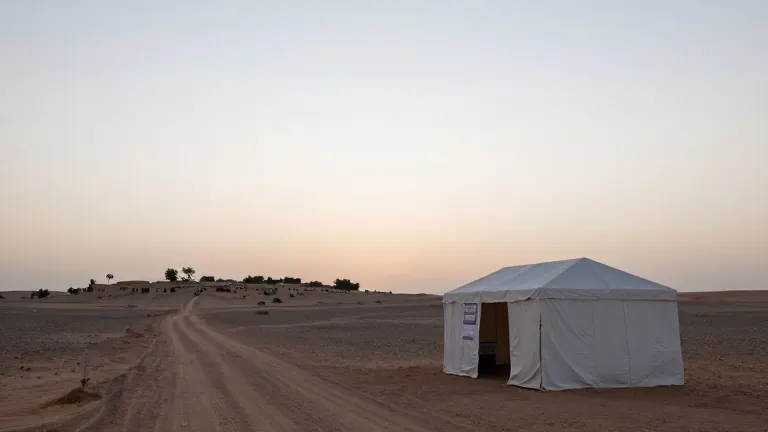
The mobilization campaign addressed specific logistical hurdles faced by women in unrecognised villages. Since these areas lack municipal status, residents do not vote in local elections and often have no polling stations nearby. Voters had to travel to recognized towns, sometimes taking up to an hour each way on camel, horse, donkey, or bicycle. Jewish women provided rides to Bedouin women, working around a 2019 rule that prohibited organized transport volunteers.
Benjamin Netanyahu, the prime minister, launched a social media campaign that included AI-generated images of crowded polling stations in Palestinian areas to boost turnout among his base. He later accused the Palestinian-led parties of fraud and foreign support, citing the unprecedented rise in Bedouin voter participation. Amit Segal, a pundit and close confidant of the prime minister, described the increase in turnout as historically unprecedented.
Opposition leaders and election organizers rejected the fraud allegations. Amira Habdoubi, an organizer from the village of Abu Talul, countered that the high turnout was a result of awareness rather than corruption. She noted that for a community whose civil rights are often contested, voting served as a rare opportunity for political expression when protests could lead to arrests.
The campaign also aimed to counter the fear generated by regional conflicts. Unrecognized villages lack state-provided bomb shelters or warning sirens, leaving residents vulnerable during missile attacks. Six of the 36 children killed on October 7 were from Bedouin villages, and at least four people were seriously injured by Iranian missiles. Activists argued that the lack of security infrastructure drove voters to the polls to demand change.
Raluca Ganea, the founding executive director of the Zazim community action group, reported that hundreds of women volunteers helped Bedouin voters reach the polls. Approximately 150 men provided a protective presence at polling stations to de-escalate potential right-wing provocations. The group stated that placing men in the front line reduced the likelihood of Bedouin men being arrested or harmed during confrontations.
In the 2022 election, turnout among Bedouin women was approximately 20%. Informal data from the current election indicates that turnout in unrecognised villages exceeded 60% among women. Israel does not officially break down voting statistics by gender. The Alnashmiat network, which has operated for over a decade, plans to bring its collaborative approach to the new parliament to rebuild state relations.
Source: The Guardian