BepiColombo completes orbit insertion around Mercury
The Europe-Japan spacecraft will split into two probes in December to map the planet and study its magnetic field.
By Olivia Reed ·
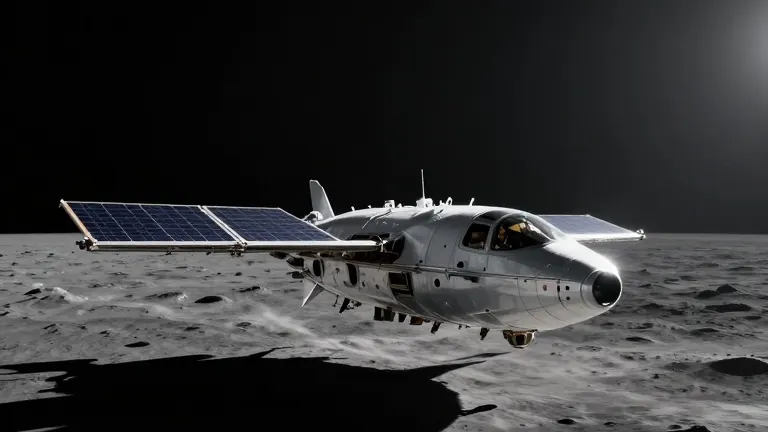
BepiColombo, a joint mission from the European Space Agency and the Japan Aerospace Exploration Agency, completed a six-billion-mile journey to Mercury on November 21. The spacecraft became the second in history to enter orbit around the innermost planet. It will remain there for at least a year to survey the surface and measure the planet's composition.
Emma Bunce, a space physicist at the University of Leicester, oversees an X-ray detector on the mission. She described Mercury as an overlooked planet due to its lack of atmosphere and seasons. The planet's surface reaches 800 degrees Fahrenheit in sunlight, while its polar craters remain hundreds of degrees below zero. These permanent shadows may contain ancient water ice and prebiotic materials.
NASA’s MESSENGER spacecraft first entered Mercury orbit in March 2011. It confirmed the presence of water ice and discovered new geological structures called hollows. Sean Solomon, a planetary scientist at Columbia University who led the MESSENGER mission, noted that rocky planets serve as siblings to Earth. Studying them helps scientists test ideas about how Earth formed.
Entering orbit required precise engineering. BepiColombo used a technique called weak capture, allowing gravity to slow the spacecraft gradually. Its engines will make small adjustments for about three weeks to stabilize the path. This approach differed from MESSENGER, which used a thruster burn to brake.
The spacecraft is named after Giuseppe Colombo, an Italian mathematician who proposed the gravity-assist trajectory used by Mariner 10 in the 1970s. BepiColombo is classified as a flagship mission, the largest class of planetary research project. It will separate into two distinct probes in December.
The Mercury Planetary Orbiter, from the European Space Agency, will map surface minerals and measure crust thickness. The Mercury Magnetospheric Orbiter, from the Japanese agency, will study space weather and the planet's magnetic field. The two probes will circle Mercury at different distances to gather complementary data.
Shoshana Weider, the Mercury lead at NASA headquarters, said the mission will help explain why Mercury has a large core but few volatile elements. Scientists remain uncertain how the planet retained sulfur, sodium, and potassium after its formation. The data collected may provide clues about the delivery of water and organic compounds to the inner solar system.
More News · Cleveland news · Report a business · Got a Story?