Displacement in the West Bank: 5,000 Palestinians expelled from Hebron
UNRWA reports that nearly 5,000 residents have been forced from their homes in the occupied West Bank's largest city following a siege that began in late October.
By Olivia Reed ·
Nearly 5,000 Palestinians have been displaced in the Hebron governorate in just over a week, according to the United Nations agency for Palestinian refugees, UNRWA. The international body described the current measures as collective punishment that violates international law.
The crisis intensified on October 23 after two Israeli soldiers were killed by armed Palestinian men at a checkpoint near the city. Since that date, Hebron, the largest city in the occupied West Bank, has been under an Israeli siege. Restrictions have extended across the entire governorate, which is home to approximately 800,000 Palestinians.
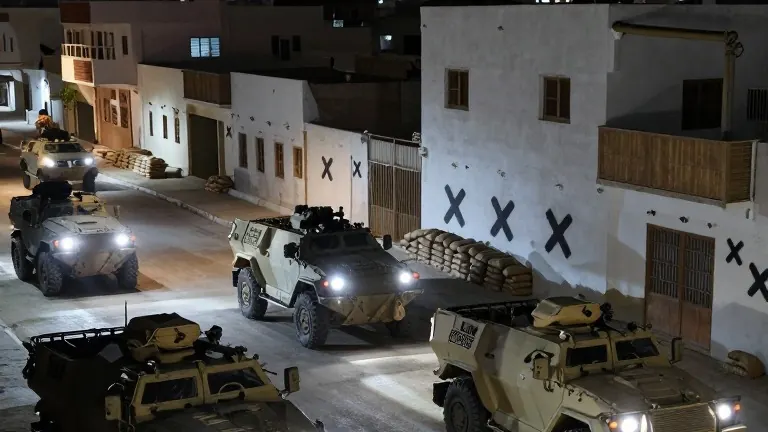
Residents described the sudden nature of the expulsion. One resident in Hebron told Al Jazeera that around 12:30 a.m., Israeli army vehicles arrived at al-Jalda Square. Soldiers ordered families to leave their homes. When asked for a timeframe, the soldiers replied until further notice. The residents left with only the clothes on their backs.
Physical markers of the displacement are visible across the city. A black X now marks the homes from which families have been forcibly expelled. Soldiers have moved into other residences, converting them into military outposts. This operation builds on years of demolitions in the region.
From 2009 until the siege began on October 23, Israeli forces demolished 2,491 buildings in the Hebron governorate, displacing 3,534 Palestinians, according to the Office for the Coordination of Humanitarian Affairs. In Masafer Yatta, a cluster of 13 communities in the South Hebron Hills, authorities demolished about 400 structures over 15 years. Nearly half of those demolitions occurred since January 2025.
UNRWA West Bank director Roland Friedrich said the scenes in Hebron carry alarming echoes of the mass displacement in the northern occupied West Bank in early 2025. More than 34,000 Palestinian refugees from the Jenin, Tulkarem, and Nur Shams camps remain displaced more than a year after Israel's Iron Wall operation began in January 2025. That operation destroyed more than half of the residential buildings in those camps.
Israeli Finance Minister Bezalel Smotrich stated in February 2025 that Tulkarem and Jenin would come to resemble Jabalia and Shujayea, two of Gaza's most devastated areas. Research group Forensic Architecture verified more than 200 incidents of destruction across four refugee camps using armored bulldozers, controlled demolitions, and air attacks. The group concluded that Israel is applying tactics in the West Bank similar to those used in Gaza.
The destruction continues in other areas. In the village of Burin, south of Nablus, troops converted several homes into military barracks. Near Jenin, the army ordered the residents of an entire village to leave permanently. Farmer Jabri Yahya said, "I have sheep and cows. Our entire lives are tied to this land. Last year they uprooted our olive trees, and this year they want to force us to leave. We don't know where to go."
Source: Al Jazeera