First Russian Diesel Since 2022 Arrives in New York
A 40,000-ton shipment represents less than two hours of U.S. consumption, arriving amid a political dispute over fuel prices.
By Michael Collins ·
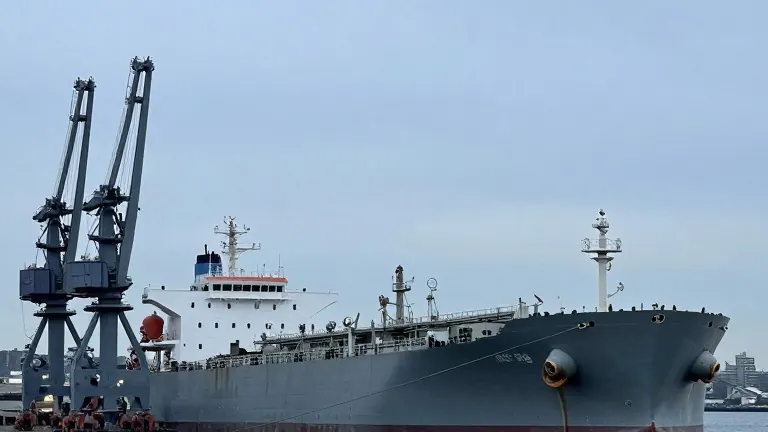
The first tanker carrying Russian diesel to the United States since 2022 is scheduled to reach New York within the next few weeks. The vessel carries 40,000 tons of fuel, a quantity that amounts to less than two hours of American consumption. This arrival follows a waiver signed by the Trump administration that reopened U.S. ports to Russian diesel through April 2027.
The shipment is a direct response to a political argument that Ukrainian strikes on Russian refineries caused U.S. diesel prices to spike. President Donald Trump stated on September 30 that Ukrainian President Volodymyr Zelenskyy was creating problems for American farmers and ranchers with diesel fuel. Trump said, “What’s happened in Russia with Ukraine has been really the biggest problem for diesel.” However, data from May through July of this year contradicts this view. During that period, Ukraine launched waves of drones at Russian refineries in Kirishi, Ryazan, Moscow, Nizhny Novgorod, and Omsk. Instead of prices rising, American diesel fell by $1.06 a gallon.
The primary driver of the current price surge is the war in the Middle East, not a shortage of Russian supply. Diesel prices were $3.48 a gallon in January and remained under $4 the week American and Israeli forces bombed Iran. When Tehran closed the Strait of Hormuz, prices jumped 96 cents in a single week. By September, the conflict had pushed diesel to a record high of $6.53 a gallon. The September consumer price index showed fuel oil up 74% on the year, a statistic the White House has used to justify the new trade deal with Moscow.
The deal promises 4.8 million tons of fuel, which is roughly 10 days of U.S. demand. Analysts doubt Moscow can ship that amount after months of Ukrainian attacks on the refineries that would fill the tankers. Sergey Vakulenko of Carnegie called the arrangement “largely for show.” For the Kremlin, the deal provides relief as September oil and gas tax revenues plunged 22% year-over-year. Former U.S. Ambassador Michael McFaul condemned the move as “absolutely deplorable,” while Zelenskyy called it “a gift to Putin.”
Alongside the diesel waiver, the administration issued an executive order that waived Russia provisions of the Graham sanctions act. This neutralized 100% and 500% tariffs and removed clauses that locked existing sanctions in place. In exchange, Washington announced an “energy ceasefire,” a term the Kremlin did not acknowledge. After Zelenskyy held his fire for three days, Russia attacked Ukrainian energy infrastructure 76 times in the following week. Zelenskyy claimed that American satellite alerts went dark for a period, a claim Secretary of State Marco Rubio denies. Reports also indicate that procurement contracts for Patriot interceptors sat unsigned on the desk of U.S. Secretary of War Pete Hegseth.
The dispute extended to the Starlink satellite network, specifically the Starshield datalinks used by Ukrainian drone units. The speed of these datalinks was capped at 160 km/h, a limit insufficient to intercept Russian jet-powered drones that operate at speeds up to 550 km/h. Trump and Elon Musk exchanged blame for the restriction. Trump reportedly called Musk to lift the cap, and U.S. officials say service is running more normally. Zelenskyy tweeted on October 24 that service had been fully restored.
The strategic context of the deal remains contested. Russian forces have made virtually no net territorial gains in 2026 despite suffering more than 40,000 casualties a month since July. At the current rate of advance, Moscow would need 60 years to capture the rest of Donetsk Oblast. Ukrainian counteroffensives, including Operation Vivaldi, have resulted in Kyiv killing or seriously wounding more Russian soldiers than the Kremlin can recruit. The 1,000-drone armada that struck St. Petersburg in mid-October was built around FP-1 drones, 90% of which are Ukrainian-made. These drones fly into Russian airspace where Starlink does not function, limiting the impact of American throttling on Ukraine’s offensive reach.
Source: Time · original report published
More Business · Cleveland news · Consumer Alerts · Report a business