Hegseth Survives First Impeachment Attempt as Democrats Vow to Return in January
Rep. Thomas Massie’s articles failed by a single vote, but incoming Speaker Hakeem Jeffries has declared the effort a priority for the new House majority.
By Daniel Parker ·
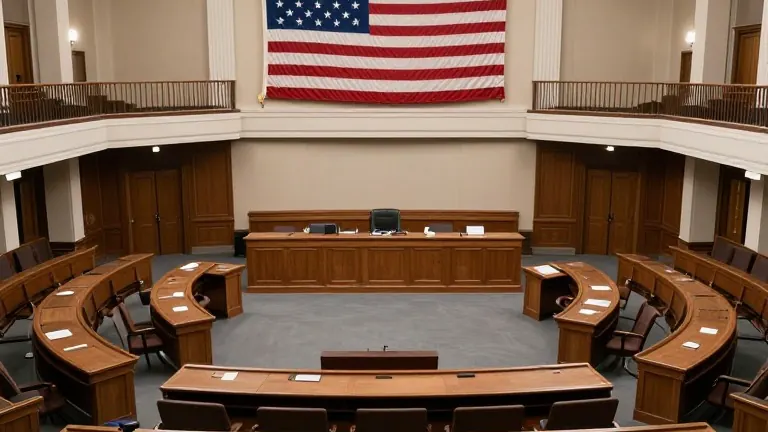
The House of Representatives voted down an effort to impeach Secretary of War Pete Hegseth on a Monday morning, ending the first congressional attempt to remove the official from office. The resolution failed by a single vote after eleven Democratic lawmakers missed the count, a delay they attributed to heavy traffic in Washington, D.C. No Republican lawmaker other than the sponsor supported the measure.
Thomas Massie, a Republican from Kentucky, filed eight articles of impeachment early this month. Massie, who recently lost his primary election to a challenger endorsed by President Donald Trump, argued that Hegseth’s handling of the war in Iran was subversive of constitutional government. The articles alleged that the Secretary of War trampled on Congress’s authority to make war.
Hegseth addressed the vote with a news conference, his first in six months. He described the impeachment attempt as an attack on the President and the troops, stating, “This is not patriotism, this is sabotage.” Following the vote, Hegseth’s spokesman declared the outcome a total victory. President Trump posted on social media that the vote represented the exoneration of a great American patriot.
Democrats plan to revive the effort when they take control of the House in January. Hakeem Jeffries, the incoming Speaker, has declared himself a hard yes on impeaching Hegseth. The new majority will have the power to investigate the administration, a process Massie noted is complicated by the fact that Republicans still have not broken from the spell of Donald Trump.
Legal scholars are divided on whether Hegseth fits the criteria for impeachment. Frank Bowman, a law professor at the University of Missouri, testified that impeachment should be a measure of last resort reserved for conduct that corrupts governmental processes. In an interview after the vote, Bowman said Hegseth is closer to the historical standard of bribery and subversion than the standard applied in the 2024 impeachment of Alejandro Mayorkas.
Michael Gerhardt, an impeachment scholar at the University of North Carolina, agreed with Bowman’s assessment. Gerhardt stated that in some ways, Congress does not have a choice and that failing to use impeachment in this instance might set the wrong kind of precedent. He acknowledged the political risks but argued that the conduct required action.
Hegseth, a former Fox News host, has faced scrutiny over his tenure at the Defense Department. He personally ordered extrajudicial killings of alleged drug traffickers at sea and purged military leadership. He also sought to punish Arizona Senator Mark Kelly for reminding service members of their right to refuse illegal orders. Hegseth denies any wrongdoing, including a reported history of alcohol abuse and sexual assault.
The political math for the new Democratic majority is difficult. Removing Hegseth from the Senate would require eleven Republican votes, a high bar given the current partisan alignment. The Mayorkas impeachment passed the House by a single vote on the Republicans' second try but failed in the Senate. Lawmakers must now decide if the specific charges against Hegseth justify the political cost of another likely defeat.
More Politics · Cleveland news · Report a business · Got a Story?