
One millimeter change signals skin risk
Experts in Cuyahoga County advise residents to monitor subtle shifts in moles and check hidden areas during annual exams.
By Sofia Morales ·
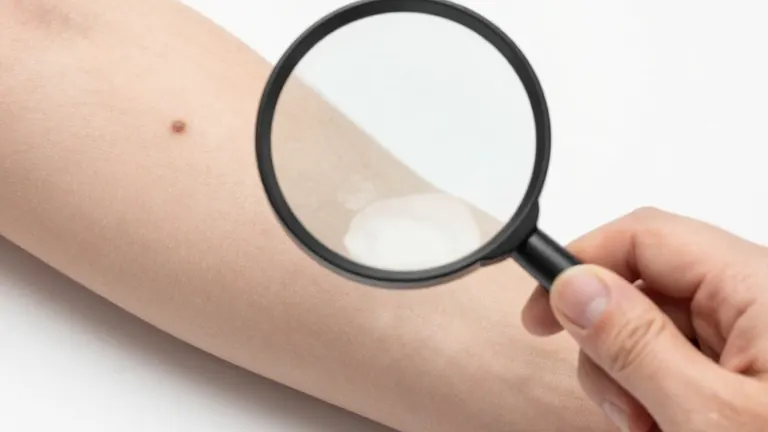
A shift of just one millimeter in a mole can signal a serious health risk, according to local medical experts. Dr. Rhea Rogers, a board-certified physician, emphasized that small changes matter more than people often realize. She noted that many residents overlook subtle warning signs as they age. These signs include sores that fail to heal or moles that bleed easily.
Rogers explained that doctors evaluate spots using the ABCDE method. They look for asymmetry, border irregularity, color variation, diameter, and evolution. She urged people to track these changes over time. "We look at the asymmetry, how symmetric is it? Is it the border of it? Does it change? The color, the color can change. The diameter, and then evolving. Is it changing in its appearance to you?" Rogers said.
Gerontologist Sam Cradduck added that changes matter even for spots that have been present for years. "A millimeter can matter a lot," Cradduck said. She advised residents to note if a mole has grown, lost its symmetry, or started to bleed. This tracking helps doctors distinguish between benign growths and potential cancer.
Skin cancer does not always appear on sun-exposed areas. Rogers warned that tumors can hide in difficult-to-see locations. "You have to look everywhere because they can hide," Rogers said. "They can be behind your ears, between your toes, underneath the nails." She recommended that patients ask a doctor or partner to check the scalp and other blind spots. "They don’t always look scary," Rogers said. "But that’s what makes them so dangerous."
Aging well expert Amy O’Rourke shared her own experience with the disease. She visited a dermatologist for a brown spot on her cheek. A full body scan revealed squamous cell cancer on top of her head. She underwent surgery to remove the tumor. About three-quarters of her family has a history of skin cancer. O’Rourke said she now prioritizes these checks.
Rogers identified fair skin, age, and family history as key risk factors. She stated that the risk is likely a combination of genetic and environmental elements. "So probably both," Rogers said. She also corrected a common myth regarding skin tone. "Yes, you need sunscreen," Rogers said. She explained that sunscreen protects cells and DNA from UVA and UVB light, which can pass through glass.
Residents should check their insurance plans, as some cover annual dermatology exams. Rogers suggested requesting a full body scan and mole mapping during these visits. This process creates a baseline to track changes over time. Other sun protection options include rash guards, UV clothing, and wide-brimmed hats.
Source: WOIO · original report published
More News · Cleveland news · Report a business · Got a Story?