Salmon Decline Fuels Alaska Senate Battle
Villages in western Alaska face empty smokehouses as the Kuskokwim River sees fewer fish, turning a local subsistence crisis into a key factor in the state's U.S. Senate race.
By Daniel Parker ·
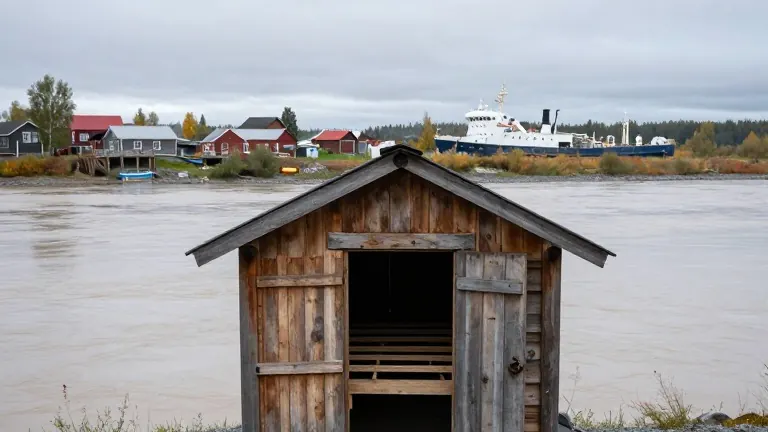
For residents of Kwethluk, Alaska, the summer season ended with empty drying racks and cold smokehouses. Evon Waska, who lives on the banks of the Kuskokwim River, said his family’s smokehouse remains unused because too few salmon have returned from the Bering Sea in recent years. Government agencies frequently close the river to fishing to conserve stocks, a measure that directly impacts families who rely on subsistence fishing for food.
Waska attributes the decline to industrial trawlers operating miles offshore. He noted that regulatory closures often target local fishers while leaving larger vessels open to operate. "They don't close the trawlers. They close me and my people first," Waska said. These vessels use nets approximately a quarter mile long to harvest pollock, a white fish often processed into imitation crab. The process frequently results in bycatch, where king salmon and other species are caught and discarded.
The dispute has become central to the 2026 U.S. Senate race in Alaska. Republican incumbent Dan Sullivan, who has historically supported the pollock industry, is promoting a new bill he describes as the most comprehensive bycatch legislation ever created. Sullivan stated the bill aims to reduce bycatch and protect seafloor habitat. However, his Democratic challenger, Mary Peltola, an Indigenous woman from the Kuskokwim River area, argues that Sullivan’s support for the fleet contradicts his new legislative push.
Peltola stated that Sullivan accepted over $300,000 in contributions from trawlers and offered a half-baked solution late in the election cycle. She has pledged to ban factory trawlers if she wins the seat. Political advertisements in the state have focused heavily on the issue, with both candidates using the fishery dispute to define their positions on resource management.
Heather Mann, who leads a trawlers association, countered that the pollock fleet is not solely responsible for the salmon decline. Mann said that eliminating pollock fishing would have a minimal impact on restoring salmon runs, according to current science. Industry data shows that trawlers have caught 40,000 Alaska salmon so far this year, a small fraction of their total pollock harvest.
In Kwethluk, the physical evidence of the decline is visible in the village's infrastructure. Mary Nikolai, the tribal president, pointed to a neighbor's smokehouse that sat idle throughout the summer. She described the situation as a slow trend of closing out the local workforce. Nikolai hopes the close Senate race will draw national attention to the threat facing subsistence communities in western Alaska.
The race is currently tight, with both candidates using the salmon issue to appeal to voters in remote villages. The outcome will determine which party holds the seat in the U.S. Senate, potentially affecting the balance of power in Washington.
Source: WWNO