
TA-35 Drops 2.85% as Israeli Vote Leaves No Clear Winner
The shekel slid to NIS 3.10 against the dollar after preliminary counts indicated a political stalemate, erasing recent market gains.
By Michael Collins ·
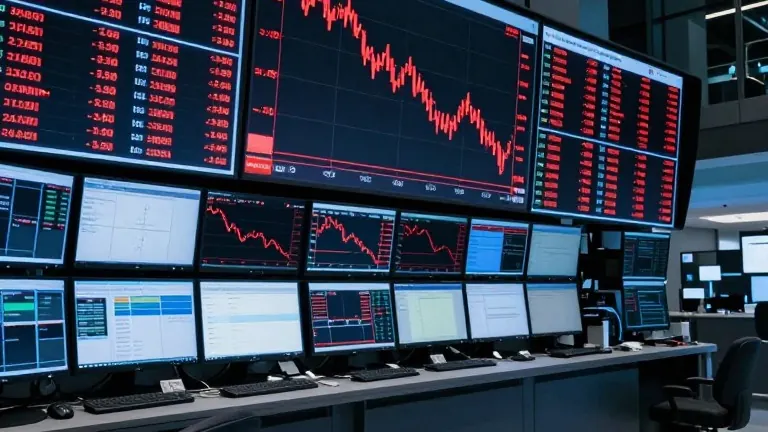
Israeli financial markets reversed course on Wednesday, wiping out two days of gains as election results pointed to a lack of decisive leadership.
The benchmark TA-35 index declined by 2.85% on the Tel Aviv Stock Exchange. The broader TA-125 index fell 3.3%, while the TA-90 dropped 4.6%. Sector-specific losses were steeper, with construction shares falling approximately 8%. Real estate and insurance indices each lost more than 6%, and bank stocks shed around 4%.
Currency markets reacted immediately to the political uncertainty. The Israeli shekel, which had strengthened to NIS 3.02 against the dollar on Tuesday, climbed to roughly NIS 3.10 on Wednesday morning. In the bond market, the yield on Israel's 10-year government bond rose by about 0.06 percentage points to near 4.1%. This increase in yield reflects falling bond prices and higher returns demanded by investors.
The market shift followed a positive trend earlier in the week. On Monday, the final trading day before the vote, the TA-35 rose 1.99% and the TA-125 gained 1.81%. Investors had bet that high voter turnout would favor the bloc opposing Prime Minister Benjamin Netanyahu. This assessment suggested a new government could ease diplomatic tensions and reduce the risk premium attached to Israel.
Preliminary counts disrupted that optimism. Exit polls at the close of voting showed a narrow lead for the anti-Netanyahu bloc, but not enough for a majority of 61 seats. Overnight partial counts placed Netanyahu's bloc at roughly 55 to 57 seats and the opposing bloc at 47 to 50, with remaining seats allocated to Arab parties. Neither side commands a clear majority, and final results are pending. JPMorgan economists had estimated in August that the election outcome could move the shekel by up to 3%.
The Tel Aviv Stock Exchange notes that volatility typically rises in the weeks following elections. Research covering ten prior cycles found that trading volatility increased by as much as 45% compared with a standard week. Attention now turns to practical governance issues, including the formation of a stable cabinet, the leadership of the Finance Ministry, and the passage of a 2027 budget.
Markets are pricing in the future path for the deficit and defense spending before official results are finalized. The current data indicates the road to a decisive government outcome is longer than investors initially anticipated.
Source: The Jerusalem Post
More Business · World news · Consumer Alerts · Report a business · Got a Story?