Trump touts tax cuts as Medicaid cuts weigh on midterm voters
The 2026 campaign centers on the One Big Beautiful Bill Act, with candidates and voters clashing over tax breaks versus reduced social services.
By Michael Collins ·
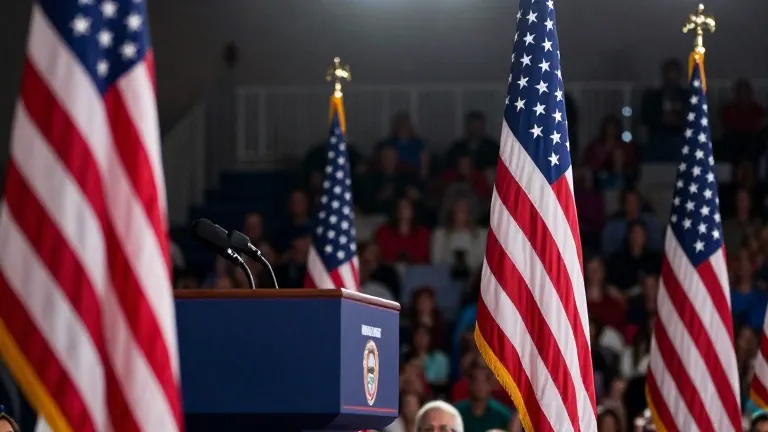
President Donald Trump stood on a stage in Corpus Christi on Tuesday and declared that his administration had passed the largest tax cuts in American history.
He pointed to the One Big Beautiful Bill Act, which he signed into law in July 2025, as the centerpiece of his midterm rally message.
The legislation reduced federal taxes and trimmed spending on several social service programs, creating a divide among candidates in the 2026 election cycle.
Republican lawmakers have promoted the tax provisions to voters throughout the summer.
Rep. Derrick Van Order, R-Wis., told the Republican National Convention in September that many Americans are unaware of specific benefits, such as the exemption on tips and overtime pay.
Democratic candidates have focused on the law's impact on wealthier households and its effects on safety net programs.
James Talarico, a U.S. Senate candidate in Texas, proposed repealing tax breaks for the top 1% of earners in an August interview.
He argued that reversing those cuts would free up $1 trillion to fund a cost-of-living tax adjustment for the middle class.
The bill also altered Medicaid policy, a change that has prompted some voters to scrutinize candidates more closely.
Amber Mader, a voter in Arkansas who relies on Medicaid and Social Security Disability, said her benefits have decreased since the law took effect.
Mader, who is paralyzed and disabled, reported that her home health care nursing and transportation services have been reduced.
She stated that the tax cuts provide no direct benefit to her daily life, while the service cuts create severe disruptions for her care team and appointments. "We are, however, dealing daily with severe difficulties and disruptions to basic services, things that are not optional for me because of this bill," Mader said. Experts suggest the bill's long-term effects may differ from its immediate political message. Elena Patel, co-director of the Urban Brookings Tax Policy Center, noted that tax policy is difficult to use for immediate affordability issues like gas and groceries. Patel said that while early changes benefited middle and lower-class families, the law will likely favor high-income taxpayers as time passes. Todd Belt, a political science professor at George Washington University, said that voters remain focused on the cost of living, a factor that has not yet been offset by the tax cuts.
Source: WOIO · original report published
More Politics · Cleveland news · Report a business · Got a Story?