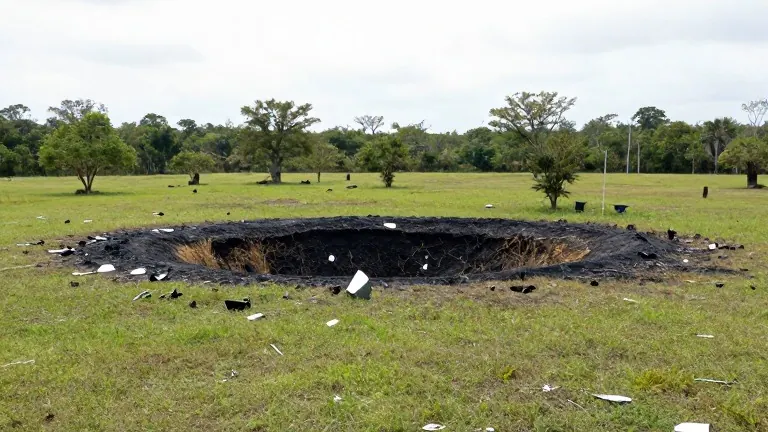
Crater and scattered debris: Learjet crash investigation intensifies
Debris found miles from the impact site in Florida confirms the aircraft disintegrated during a steep descent, complicating the NTSB's search for a probable cause.
By Michael Collins ·
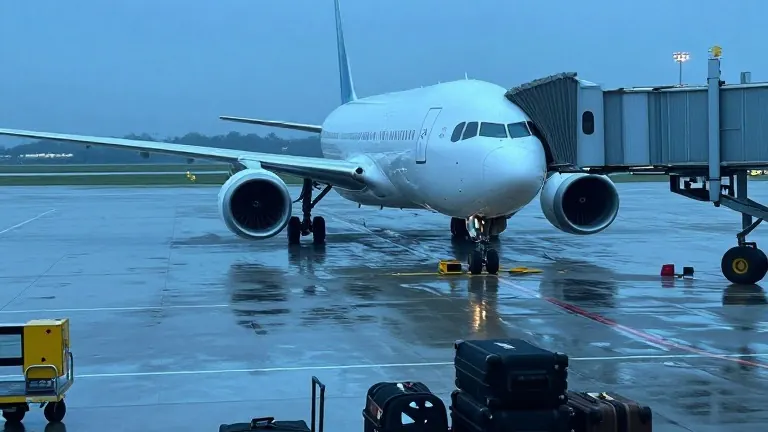
Investigators located fragments of the Learjet's left elevator nearly 4 miles from the crash site in Florida on Tuesday, a distance that confirms the aircraft was breaking apart before it struck the ground. The National Transportation Safety Board member Tom Chapman stated that most of the tail component, which controls pitch, was found in three pieces between 1.3 and 3.8 miles from Greenacres, near West Palm Beach. The jet crashed Sunday afternoon, killing all nine people aboard.
The scattered wreckage indicates that the elevator components likely detached during the nosedive rather than causing it. Chapman noted that without an intact elevator, the pilot would not have been able to pull the aircraft out of its descent. He added that even if the part had remained attached, its effectiveness at such speeds is uncertain. Chapman described the discovery as a critical piece of evidence that directs the investigation toward other factors.
Aviation safety expert Jeff Guzzetti told the Associated Press that the parts were probably a byproduct of the steep dive. He observed that if the components had broken off at altitude, they would have traveled much farther than the few miles observed. This suggests the structural failure occurred closer to the ground. The plane hit the earth with enough force to create a crater before catching fire, displacing approximately 600 nearby residents.
The victims included technology entrepreneur Adam Robinson, his wife Helen Sharp, and their two young children. Jeff Gregory, 55, who lived in the Philadelphia suburbs, served as one of the two crew members in the cockpit of the Bahamas-bound Learjet 60. Friends believe Gregory recited the Lord's Prayer during the final radio transmissions. Thomas Noetzel, director of operations at Upper Jets, which operated the flight, launched a GoFundMe campaign to support Gregory's family. Noetzel described Gregory as a devoted and conscientious man with a genuine passion for flying.
Co-pilot Nathalia Gadelha Filgueiras reported turbulence and ice to her boyfriend about 10 minutes before the crash. In the final two minutes, her communication with air traffic control shifted from calm to urgent. She reported that ice was accumulating and that turbulence had moved the plane up and down by more than 700 feet. As the jet descended at a rate exceeding 20,000 feet per minute, she told controllers, "We're going to crash into the ground." Her final words were, "We're out of time!"
Chapman reasserted that weather remains a primary focus of the investigation. The NTSB team plans to access the crater on Wednesday after several days of heavy rain to recover critical components. A preliminary report is expected in about a month, but determining the probable cause will likely take more than a year. Only one person on the ground was reported injured in the crash.
Source: WUWF
More Business · Consumer Alerts · Report a business · Got a Story?