Husted and Brown trade blows on cost of living ahead of Senate vote
Inflation data shows electric bills up 13.5% statewide while both candidates point to taxes, tariffs, and data centers.
By Olivia Reed ·
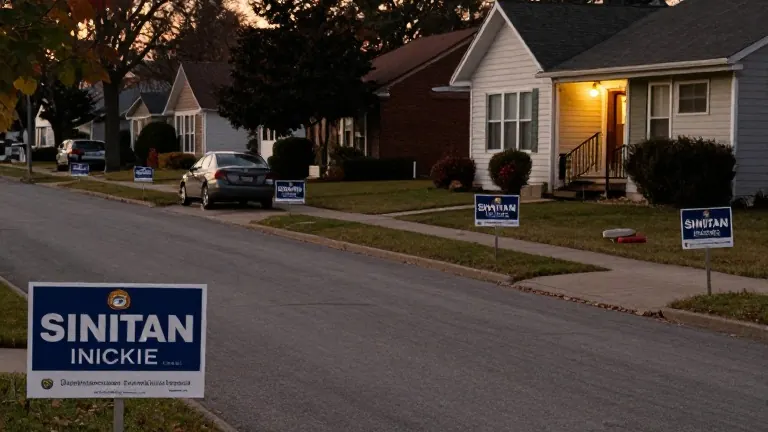
Ohio voters decide who represents the state in the U.S. Senate on Tuesday, Nov. 3, with the campaign focused heavily on the price of basic necessities. Incumbent Republican Sen. Jon Husted and former Sen. Sherrod Brown are framing the election around affordability, each accusing the other of causing or ignoring the high cost of living for families across the state.
The economic backdrop for this debate is defined by rising prices that have outpaced wage growth. Data from the U.S. Bureau of Labor Statistics indicates that the inflation rate, which had slowed after 2020, is rising again. A specific metric for Ohio households comes from the Ohio Public Utilities Commission, which reports that residential electric bills have increased by 13.5% on average over the past year statewide.
Husted, who filled Vice President JD Vance's vacant seat in 2025, links his record on affordability to the federal government's recent tax actions. He cites the One Big Beautiful Bill Act, which passed last year and included short-term federal tax deductions for certain earnings and for Americans over 65 who collect Social Security. Husted stated earlier this year that prices remain too high but that the Working Families Tax Cut helps families keep more of what they earn.
Brown counters with his legislative achievements from his final term in the Senate. His last vote in 2024 was in support of the bipartisan Social Security Fairness Act, a law he co-authored. Brown told AARP that the act restored full benefits to 250,000 Ohioans, including teachers, firefighters, police officers, and other public employees. The law ended long-term measures that had reduced Social Security benefits for public sector retirees and their families who also receive pensions.
The two candidates also disagree on the impact of President Donald Trump's tariffs on household budgets. A data analysis by the New York Federal Reserve suggests these tariffs are driving inflationary increases on everyday goods. The National Taxpayers Union Foundation estimates that these costs have amounted to approximately $11 billion for Ohio statewide. Husted has largely defended the administration's tariff strategy, though he noted in an interview with the Statehouse News Bureau late last year that retaliation can make it hard on American consumers.
Brown, who previously supported shorter-term targeted tariffs, has criticized the current wide-ranging approach. He told reporters last month that farmers struggle to afford new tractors or combines due to tariff costs. He argued that ending the war and the tariffs would have an immediate impact on gas, diesel, and food prices.
A newer point of contention involves data centers and their effect on utility rates. Brown has highlighted Husted's past praise of data center construction, linking it to higher electric bills. Husted has recently adjusted his stance, stating that data centers need to cover their own costs. A recent digital ad from Brown features a woman reacting to Husted's podcast comments that people need to be taught how to budget, with the woman saying, “F, that!”
Husted's campaign released an ad in May blaming Brown for the sky-high cost of living. The race concludes on Tuesday, Nov. 3, when Cuyahoga County and the rest of Ohio cast their ballots.
Source: WVIZ · original report published
More Politics · Cleveland news · Report a business · Got a Story?