New Mexico Leaders Erect Ofrenda in Old Town to Honor Dolores Huerta
Local officials in Albuquerque set up a memorial display hours after the civil rights icon died at age 96, coinciding with the start of Día de los Muertos.
By Olivia Reed ·
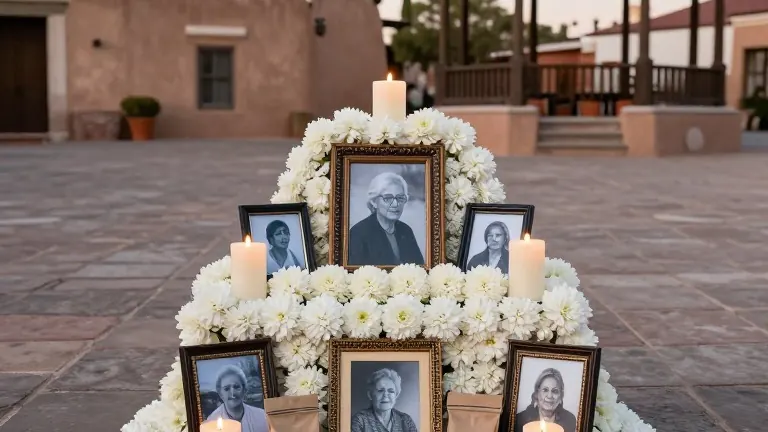
An ofrenda dedicated to Dolores Huerta now stands beside the gazebo at Old Town Plaza in Albuquerque. Local officials placed the memorial structure on Wednesday, just hours after Huerta’s family confirmed her death. She was 96 years old.
The display features photographs, candles, flowers, and written messages from community members. It also includes bread from a local bakery and seeds intended to accompany the deceased on a spiritual journey. The public is invited to add items to the altar for the next seven days.
The timing of the memorial aligns with the traditional observance of Día de los Muertos. Customs for the holiday, which began on Tuesday, October 28, involve lighting candles and placing white flowers to honor those who died suddenly. Congresswoman Melanie Stansbury (D-NM) described the ofrenda as a method to commemorate the activist and support the passage of her soul.
State House Speaker Javier Martinez (D-NM) and Mayor Tim Keller joined Stansbury in setting up the tribute. The three leaders discussed Huerta’s impact on the region and her personal connection to New Mexico. Keller noted that Huerta frequently returned to her home state and identified proudly as a New Mexican.
Martinez expressed the community’s grief following the announcement. He stated, “Devastated, hurt. Even though she had a long life, right, and perhaps not unexpected at this point in her life, there’s a sense of loss.” The group emphasized that Huerta was viewed as one of their own by the state’s leadership.
Huerta is widely recognized for coining the phrase “Sí, se puede,” which translates to “Yes we can.” The slogan was first chanted in 1972 and later became a central chant for various social movements. Following her death, local leaders said the phrase carries a renewed weight as a pledge to sustain her work.
Colleagues described Huerta’s personal demeanor as humble despite her national status. Martinez observed that she led with her heart rather than relying on a protective entourage. “Being somebody of that stature, it could have been really easy for her to walk around with a posse, with bodyguards, you know, inaccessible. She was the opposite,” he said.
Huerta’s recent actions also drew attention during the memorial service. In March, she broke a 60-year silence to allege sexual abuse by her organizing partner, César Chávez. She co-founded the United Farm Workers with Chávez decades earlier. At the time, she told media she feared the news would negatively affect the farm worker movement.
Stansbury characterized Huerta’s decision to speak out as an act of honesty regarding the experience of women in leadership spaces. “It was a moment to stand with survivors and to tell her own story of survival, not to cast a stain on the movement, but just to be honest about her own lived experience,” Stansbury said.
Martinez added that Huerta continued to speak truth to power until her final months. He highlighted the courage required to address her long history with Chávez while maintaining her commitment to the movement.
Source: KOB