US and Japan to build joint missile plant in Japan
Defense ministers in Cebu announced a new facility for AMRAAM production amid rising tensions in the Asia Pacific region.
By Michael Collins ·
Three Chinese destroyers and one coast guard ship crossed the Osumi Strait this week. The fleet moved from south of Kyushu to the Pacific Ocean, marking the first time Japanese officials have recorded such a configuration. Japanese Defense Minister Shinjiro Koizumi cited the incident as evidence of a challenging regional security environment.
Koizumi made the announcement during a news conference in Cebu, Philippines, on Wednesday night. He met with U.S. Defense Secretary Pete Hegseth on the sidelines of an annual gathering of Southeast Asian defense chiefs and their Western and Asian counterparts. The two nations agreed to establish a Japanese facility for the joint production of advanced medium-range air-to-air missiles.
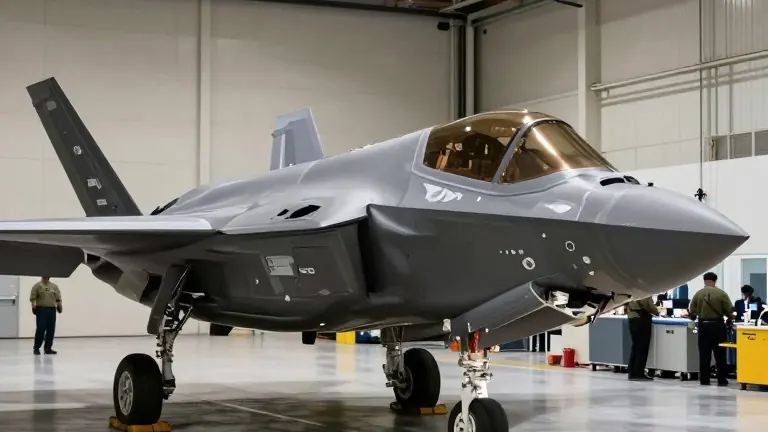
The missiles are essential for F-35 fighter jets, which are used by both the U.S. and Japanese militaries. The joint effort, designated Operation Supercharge, involves building a final assembly and inspection plant for the Advanced Medium-Range Air-to-Air Missile, or AMRAAM, inside Japan.
Koizumi stated that he and Hegseth shared a sense of crisis regarding the regional situation. He said the two leaders agreed to strengthen the deterrence and response capabilities of the Japan-U.S. alliance with greater speed and intensity. The ministers reaffirmed the importance of a free and open international order based on the rule of law.
Hegseth addressed ASEAN defense ministers in a separate meeting on Wednesday. The group was led by Philippine Defense Secretary Gilberto Teodoro Jr. Hegseth described the U.S. approach as strong, quiet, and clear. He stated that the strategy is strong enough to deter coercion and aggression while remaining quiet enough to avoid needless escalation.
Hegseth said the message is clear to friends, partners, and potential adversaries. He assured them that the United States will defend its interests and those of its allies. The U.S. has warned that it is obligated to defend the Philippines if Filipino forces come under armed attack, including in the South China Sea.
Australian Defense Minister Richard Marles also spoke in Cebu. He said Australian forces and allies will continue to defend the rule of law despite increasing assertiveness from China. Marles referenced an incident last year where a Chinese J-16 fighter flew within 30 meters of an Australian P-8 Poseidon surveillance jet over disputed waters.
The annual meetings aim to avert major regional conflict and strengthen defense cooperation. The U.S. and China, along with their allies, have frequently exchanged criticisms during these sessions. Japan has been accelerating its military buildup in the southwest to deter China, while Beijing and Tokyo maintain a separate dispute over islands in the East China Sea.
Source: WVIZ · original report published
More News · Cleveland news · Report a business · Got a Story?