Indian State Capacity Lags Behind Development Goals
A new analysis argues that weak governance, not lack of resources, is the primary barrier to India’s economic progress over the next two decades.
By Sofia Morales ·
New Delhi, India. A new report released on November 3 identifies the quality of the Indian state as the central obstacle to the nation’s future development. The analysis argues that while India faces major challenges in education, health, and manufacturing, the inability of the government to function effectively is the root cause of these failures. The authors contend that without a more competent state, progress in other sectors will remain elusive.
The report highlights a disconnect between India’s political ideology and its administrative reality. Despite deep political and social divisions, the governing Bharatiya Janata Party, communist parties, and other groups share a belief in a strong state role in the economy and social change. Yet, the analysis finds that little effort has been devoted to improving how the state actually functions. This lack of administrative capacity is described as a deliberate choice by the political class rather than an accidental outcome of electoral competition.
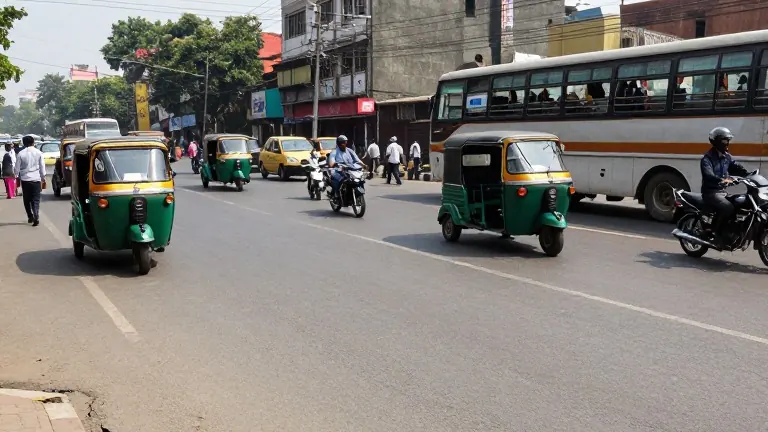
Urban governance failures provide a concrete example of this weakness. Over the past decade, more than 1.5 million people, mostly of working age, died in road accidents in India. The fatality rate is much higher than the global average per distance traveled. Roughly one-third of these victims were pedestrians, often killed because cities failed to construct or maintain sidewalks. The report cites the poor condition of sidewalks as evidence of weak urban governance and state governments’ desire to control lucrative land.
The legal system and public safety also reflect these state deficits. While violence has declined, the report states that police often act as predators rather than protectors. Tens of millions of cases are stuck in overwhelmed courts, which turns the legal process itself into a punishment for those involved. The analysis suggests that if businesses cannot enforce contracts and citizens cannot feel safe, the foundations of economic development remain fragile.
Human capital development is another area where state failures are evident. Although Indians are living longer, many are not necessarily healthier. High levels of malnutrition and stunting affect tens of millions of children. Public schools see higher attendance, but learning outcomes remain poor. The report notes that hiring teachers is a source of political patronage, and the middle class rarely sends children to public schools, leaving the system without a strong constituency for reform.
The structure of the Indian civil service contributes to these problems. India has fewer public employees per capita than China or the United States, but those employees are concentrated in state governments rather than local or federal bodies. This concentration has deprived cities of authority and agency. The report describes the system as having the engine of a bullock cart and the brakes of a Rolls-Royce, a result of rigid hierarchy and mistrust rooted in a status-conscious society.
The persistence of these pathologies is linked to the benefits they provide to the political class. The state offers immense rents to politicians and bureaucrats, while public employees form a powerful group against reform. Administrative changes are often ignored because their rewards fall beyond the typical electoral cycle. A weak state is easier for politicians to capture, allowing them to browbeat opponents and extract rents from business elites.
The report suggests that technology offers a path to improved capacity. India has built a world-class digital public infrastructure that has improved taxation, procurement, and welfare payments. However, the ease of transferring money to voters has also encouraged competitive populism. The state often prefers to give citizens fish rather than teach them to fish, preserving their dependence on government largesse and their pliability as voters.
Co-production of public goods with civil society and business is another potential solution. The analysis references the work of Nobel laureate Elinor Ostrom, who observed that many public goods are produced by both the state and society. Effective cooperation requires the state to trust civil society rather than seeking to control it for political reasons. Contracting services to private companies can also help, though the danger of rent extraction remains.
The condition of the Indian state offers little confidence that it is preparing for the challenges of the next two decades. Core institutions, including the bureaucracy, courts, regulators, and the Election Commission, are weakening. The report concludes that unless the political class changes its deliberate choice to maintain this strategic weakness, India will struggle to meet its development goals.
Source: Time · original report published
More World · Cleveland news · Report a business · Got a Story?