Israelis Cast Ballots in Knesset Race Where Neither Bloc Commands Majority
Polls indicate a stalemate in the 120-seat parliament, leaving the outcome of the conflict and Benjamin Netanyahu's tenure dependent on turnout and post-election negotiations.
By Michael Collins ·
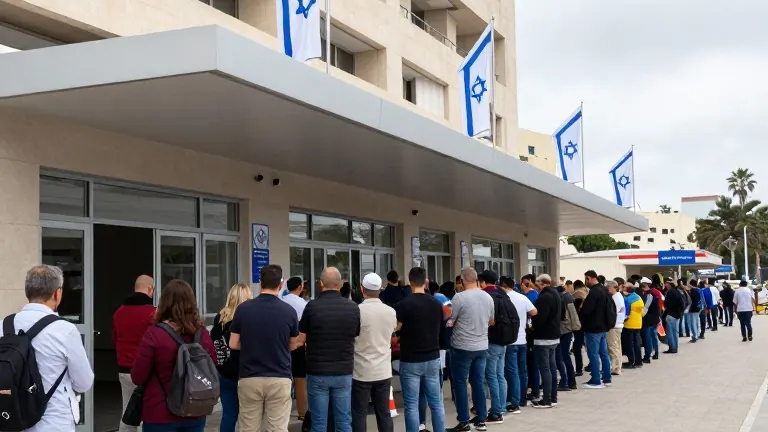
Benjamin Netanyahu seeks a fourth consecutive term as Israeli voters head to the polls Tuesday for the Knesset election. The prime minister is attempting to retain power three years after the Oct. 7, 2023, Hamas attacks, with active wars ongoing in Gaza, Lebanon, and Syria. His Likud party leads a right-wing and religious bloc that polls suggest will not secure a decisive majority of the 120 available seats.
The election pits the incumbent coalition against a diverse change bloc led by former military chief Gadi Eisenkot. Eisenkot, who lost his son and two nephews in the Gaza war, runs on a centrist platform promising a state inquiry into the intelligence failures of Oct. 7. He contrasts his candidacy with Netanyahu’s reliance on fear-mongering regarding Iran’s nuclear program. Trump has publicly backed Netanyahu, warning that the U.S. might have to conduct its own military work if Israel chooses a different leader.
Voter turnout will be the deciding factor in a race where margins are razor-thin. Arab Israelis, who comprise roughly 20% of the population, hold significant sway over the final tally. Jehad Abomoch, a cafe owner in Baqa al Gharbiya, stated that many in his community are motivated to vote to block Netanyahu’s far-right allies. "The last four years were a real catastrophe, both socially and in terms of wars," Abomoch said.
Two new parties focused on conscripting ultra-Orthodox men for military service are also contesting the election. Both parties hover near the threshold required to enter the Knesset. Their entry could disrupt Netanyahu’s traditional coalition partners and alter the balance of power regardless of which main bloc wins more votes overall.
If neither side wins a majority of 61 seats, the path to government becomes complex. The change bloc could attempt to form a minority government with the support or abstention of Arab parties. Alternatively, lawmakers may switch sides during protracted negotiations. If those efforts fail, Israel faces a repeat of the 2019 to 2022 period, which saw five elections held due to electoral deadlock.
Yohanan Plesner, president of the Israel Democracy Institute, noted that an indecisive outcome is the most likely result. He warned that if politicians strictly adhere to their campaign promises and refuse to cooperate, the country will face another election cycle. Netanyahu’s campaign slogan, "Either right wing or Palestine, either right wing or a nuclear bomb," underscores the high stakes of the vote.
Source: CBS News