Scholar Robert Eisenman dies at 89, having published hidden Dead Sea Scrolls
The Long Beach professor’s release of 75% of the ancient fragments in the 1990s reshaped academic access to early Christian texts.
By Daniel Parker ·
Robert H. Eisenman, a professor of early Christianity at Cal State University of Long Beach, died at his home in Fountain Valley, California, on Friday, October 23, 2026. He was 89 years old. His family was present when he passed.
Eisenman is best known for his role in making the Dead Sea Scrolls publicly accessible. For decades, a small group of scholars controlled access to the vast majority of the fragments discovered in 1947. While the largest and best-preserved scrolls were published early, the immense cache of smaller fragments remained locked in the Rockefeller Museum. Eisenman and other academics opposed the 40-year restriction on public access.
In the 1980s and 1990s, Eisenman acquired a complete photographic set of the remaining unpublished scrolls. He partnered with Biblical Archaeological Review to publish the entire remaining corpus in a Facsimile Edition. He stated his goal was "to finally reveal the scrolls to the public and let a thousand voices sing." This publication released approximately 75% of the scrolls that had remained under strict control.
The release of the texts opened new avenues for research into the community that produced the scrolls. Scholars gained the ability to interpret the fragments with academic freedom, leading to the establishment of a new field of study. Eisenman used these texts as the foundation for several books, including "James the Brother of Jesus." That work examined the conflict between pro-revolutionary Jamesian Christianity and pro-Roman Pauline Christianity, contributing to the modern search for the historical Jesus.
Eisenman was born in 1937 in South Orange, New Jersey. He was the son of Herschel and Sylvia Eisenman and the brother of architect Peter Eisenman. He graduated from Columbia High School a year early to attend Cornell University. After college, he moved to the Latin Quarter in Paris, where he met his future wife, Heather Seton. He later earned a Master’s degree from New York University in Near East studies and a Doctorate from Columbia University in Middle East languages and cultures.
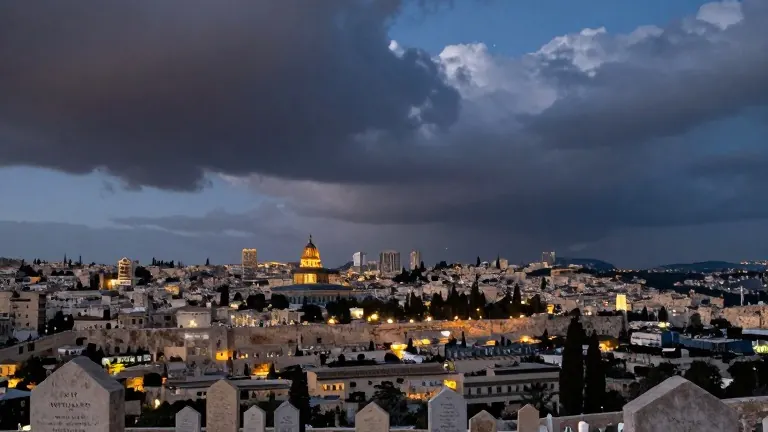
He spent 40 years teaching at Cal State University of Long Beach, where he helped create the Religious Studies Department. He taught courses on early Christianity, Judaism, and Islam. He lived in Orange County, California, until his death. He was buried on Tuesday, October 27, 2026, on the Mount of Olives in Jerusalem, next to his great-grandfather. Rabbis noted the lightning and thunder during the burial as an auspicious sign.
Eisenman is survived by his wife, Heather, his children Lavi, Hanan, Nadav, and Sarah, and eight grandchildren. His headstone will bear the inscription "He Sought Righteousness."
Source: Long Beach Press-Telegram
More Business · Fountain Valley news · Consumer Alerts · Report a business · Got a Story?